

A Wave on the Ocean
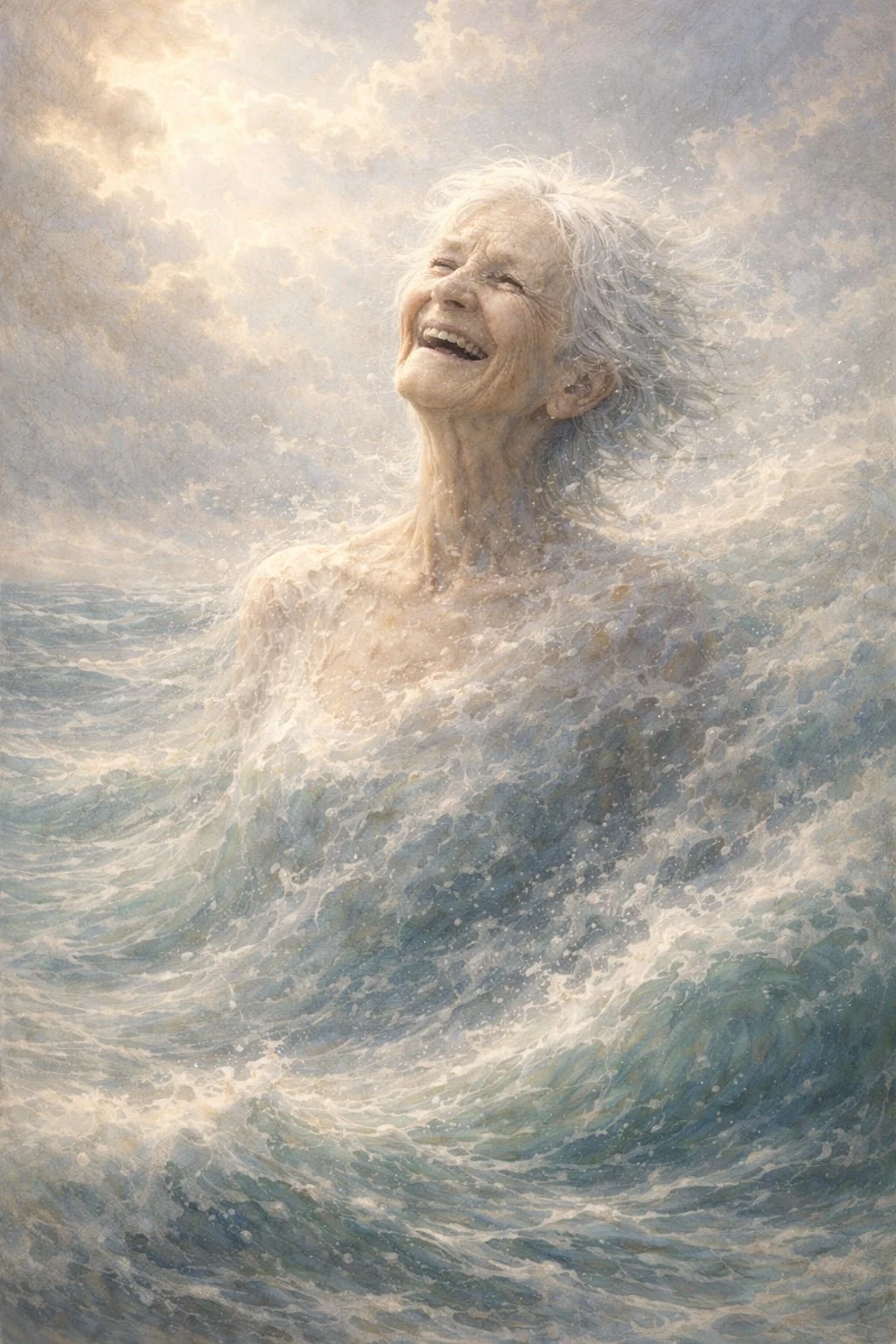
My mother had a difficult childhood, the kind that leaves adverse weather systems in the mind: turbulent memories, sudden shadows, remnants of fear. Despite that, she lived bravely, willing to try new things—which is how she found herself one day holding a homemade brownie from her friend as they boarded a cruise ship in their eighties. I whispered to her gently, “Mom, that’s a marijuana brownie. Better just have one bite, if any.” She slipped it into her bright canvas bag and boarded the ship, distracted and determined.
A couple of days later, somewhere far from shore, she forgot our conversation and ate the whole thing—with tea. Within the hour, the old panic closed in. Then she remembered what I’d said years before in one of our frequent conversations about dharma and death, “Everything that arises in your experience after death is the mind’s very vivid display. Like memories. Like dreams. No need to be afraid, no matter what you see or hear.”
In her tiny room on the cruise ship, she applied that teaching to her very down-to-earth predicament. She told me later that, the moment she remembered, her panic subsided. She even managed to laugh at the absurdity of it all.
Not long after the cruise, our mother had a cardiac event. It didn’t go well, and eventually she chose home hospice. I left residency in Great Vow monastery and cared for her there. One evening, towards the last of her days, I reminded her of the brownie story. She raised her eyebrows, a little amused and a little embarrassed. I told her, “After you die, if difficult things appear in your mind—whatever they might be—don’t be afraid. Remember the teaching from the brownie: Everything that appears is your mind: creative, endless, capable of even shocking displays.” She closed her eyes, then opened just one, and smiled mischievously. We laughed just a little.
My mother didn’t know Buddhist words like nature of mind, or rigpa, or dharmata. But she knew one very important thing: how to face fear with openness. The very childhood experiences that harmed her also left a blessing in their wake: a kind of unguarded bravery, an ability to meet experience head-on.
When she died, I hope with all my heart that the same blessing asserted itself ; quiet, wordless, familiar. Nothing dramatic, just the simple recognition of her own luminous mind, first at sea, then after she passed away, in the ocean of awareness.
